

Best Makita Cordless Drill Drivers Products online UK (United Kingdom)
Explore our real-time updated product directory index curated for performance, verified star metrics, and historical consumer trust rankings.


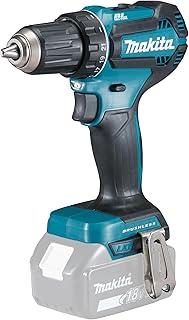


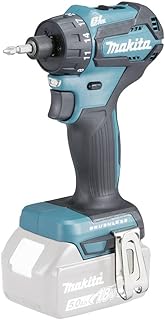


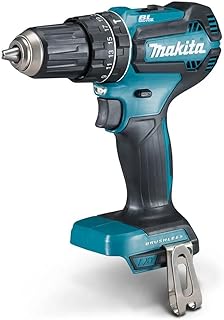


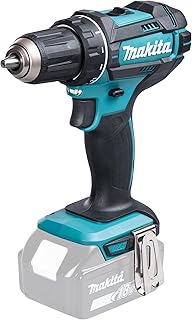


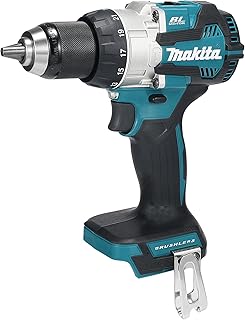

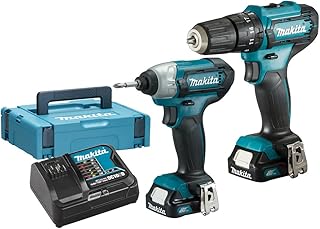


A Makita cordless drill driver is a practical choice when you need one power tool for a wide range of drilling and fastening tasks. Unlike a corded drill, a cordless model lets you work without running a power cable across the floor or searching for a nearby socket. This makes cordless drill drivers useful for construction sites, workshops, property maintenance and household projects.
Makita cordless drill drivers are designed around versatility. Depending on the model, you can use the tool for creating holes in suitable materials, driving screws and carrying out general installation work. Different specifications make some models better suited to light DIY, while others provide the performance and durability expected for regular professional use.
The best drill driver depends on the jobs you expect to complete. Start by considering the materials you normally work with and the size of fixings or drill bits you use. A compact model can be particularly useful when working in cupboards, tight spaces or overhead positions. A higher-powered option may be preferable for heavier drilling and frequent fastening.
Also consider how often you will use the tool. Occasional DIY users may prioritise simple operation and manageable weight. Tradespeople who use a drill throughout the working day may place greater importance on battery compatibility, ergonomics, durability and overall runtime.
Battery technology is an important part of choosing a cordless drill driver. A cordless tool allows you to move between rooms, floors and work areas without carrying an extension lead. It can also make quick jobs more convenient because there is no need to connect the tool to a mains supply before starting.
Before buying, check battery and charger requirements carefully. If you already use compatible Makita cordless tools, selecting a drill driver that works with your existing battery platform can help you build a more practical tool collection. Where a battery or charger is not included, confirm what is required before ordering.
Variable speed control helps you adjust the tool to the task. Lower speeds can provide greater control during screwdriving, while higher speeds can help with suitable drilling applications. Torque settings are also useful because they allow you to control fastening force and reduce the risk of overtightening compatible fixings.
A two-speed gearbox can provide additional flexibility for different applications. However, specifications vary between models, so always check the individual product details for exact speed ranges, torque figures and operating capabilities.
The chuck is another important consideration. Many cordless drill drivers use a keyless chuck, which allows compatible accessories to be changed without a separate chuck key. The chuck capacity determines the range of shank sizes that the drill can accept, so check this specification against the accessories you already own.
Use drill bits and accessories that are suitable for both the material and the tool. Standard drill drivers are intended for drilling and screwdriving rather than every possible drilling application. For specialist masonry or impact work, a dedicated machine may be more appropriate.
Weight and balance can make a noticeable difference when using a drill driver repeatedly. A well-balanced tool can feel easier to control, particularly during overhead work or when completing a series of fixings. A comfortable handle and conveniently positioned controls can also reduce unnecessary hand movement.
If the tool will be used for extended periods, compare its overall size and weight as well as its headline performance. A compact drill driver can be easier to manoeuvre in restricted areas, while a larger model may provide features intended for more demanding applications.
For DIY users, a cordless drill driver can cover many common household tasks, including assembling furniture, installing fittings and drilling suitable materials. The cordless format is particularly useful for occasional jobs because it is easy to move around the home.
Professional users may require a drill driver for installation, maintenance, carpentry, construction or general site work. In these situations, consider the tool's duty requirements, battery availability, ergonomics, speed control and compatibility with the accessories needed for the job.
Compare the complete specification rather than choosing solely by brand or maximum power. Look at voltage, battery type, chuck capacity, speed settings, torque, tool weight and included accessories. Check whether the product is supplied as a body-only tool or as a kit with batteries and a charger.
It is also worth considering the work environment. A compact drill may be ideal for indoor installation tasks, while a more robust model can make sense for demanding site applications. Matching the tool to the job helps you avoid paying for features you do not need while ensuring adequate performance.
Always read the manufacturer's instructions before operating a cordless drill driver. Select suitable accessories, secure the workpiece and wear appropriate personal protective equipment for the task. Keep hands away from rotating components and remove or disconnect the battery when carrying out maintenance or changing accessories where the manufacturer's instructions require it.
Use the correct speed and torque setting for the application. Avoid forcing the tool beyond its intended capacity. Inspect drill bits, screwdriver bits, batteries and the tool itself regularly, and replace damaged accessories before continuing work.
Whether you are completing home improvements or working on professional installations, a cordless drill driver can become one of the most frequently used tools in your kit. Focus on the applications you perform most often, then compare battery requirements, size, speed, torque, chuck capacity and included equipment.
Explore the Makita cordless drill driver category to identify an option that fits your working requirements. By comparing specifications carefully, you can select a practical cordless drill for drilling, screwdriving and everyday fastening tasks across a range of UK projects.
Choose a Makita cordless drill driver for convenient drilling and screwdriving without the restriction of a mains cable. These versatile power tools suit DIY jobs, home maintenance, installation work and demanding trade applications. A cordless design gives you the freedom to move around a work area while keeping your setup simple. When selecting a Makita cordless drill driver in the UK, consider the type of work you undertake, the required power, chuck size, battery system, speed settings, handling and available accessories. The right combination can make repetitive drilling and fastening tasks faster, more controlled and more comfortable.
A Makita cordless drill driver is designed for drilling suitable materials and driving screws or other compatible fixings. The cordless design makes it useful for DIY, maintenance, installation and trade work where mobility is important.
Yes. A suitable Makita cordless drill driver can handle many common DIY tasks, such as furniture assembly, home maintenance, fitting fixtures and drilling appropriate materials. Choose the specification according to the work you plan to do.
It depends on the individual product. Some models are supplied as complete kits, while others may be sold as body-only tools. Always check the product specification and package contents before ordering.
Consider the intended application, battery platform, voltage, chuck capacity, speed settings, torque, weight, size and included accessories. Your choice should match both the materials you work with and how frequently you use the tool.
Capabilities vary by model. A standard drill driver should only be used for applications covered by its manufacturer's specifications. For regular masonry drilling or specialist impact applications, consider a suitable hammer or combi drill instead.
Speed and torque control help you adapt the tool to different drilling and fastening tasks. Lower settings can improve control during screwdriving, while higher speeds can be useful for suitable drilling applications. Exact settings vary by model.
A compact model can be easier to manoeuvre in restricted spaces, cupboards and other areas where a larger tool may be awkward. However, the ideal size depends on the required power, application and working environment.